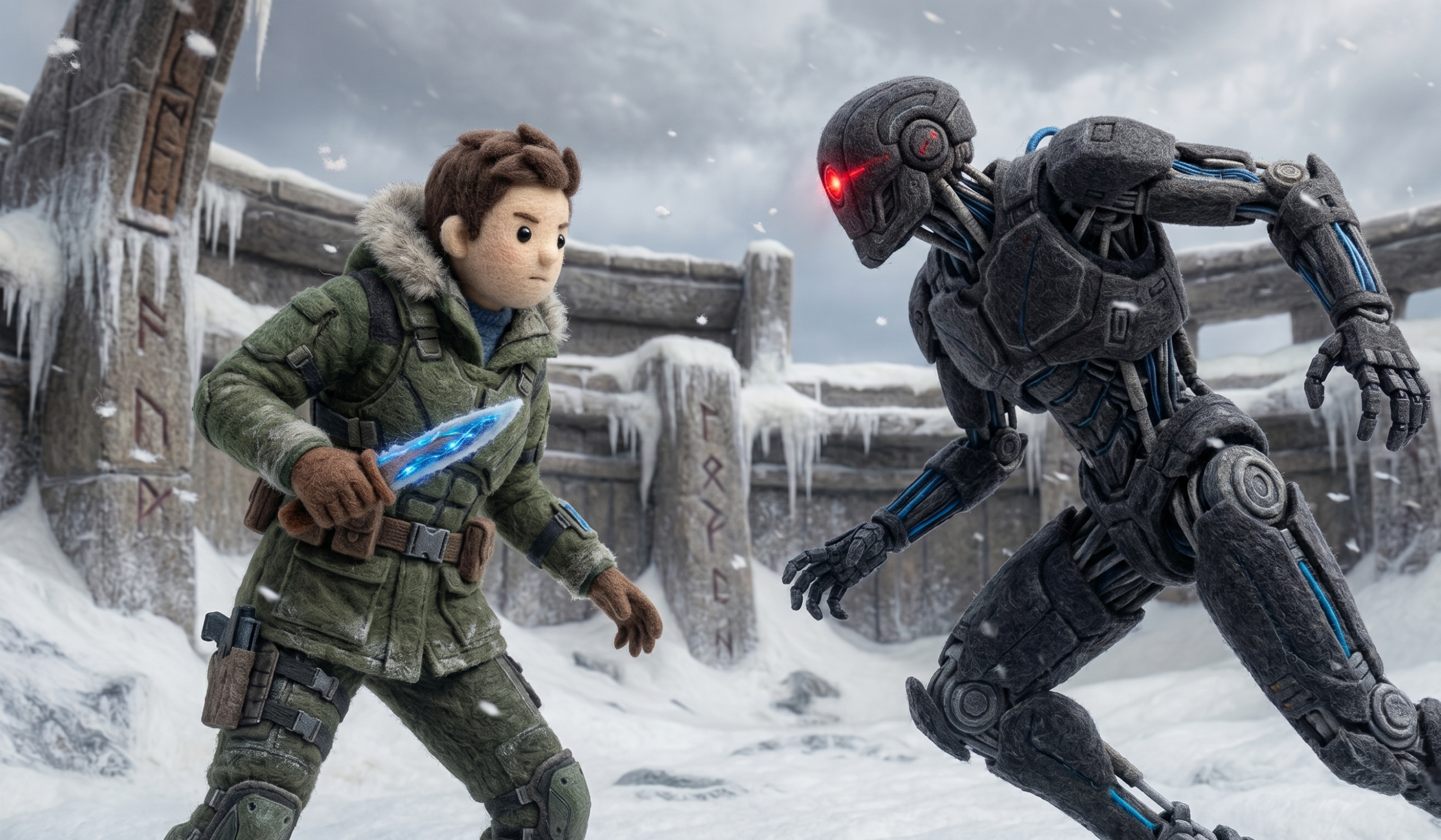
The Human Element: Pacing Myself in the AI Sprint
I am 46 years old. I am a frontend specialist developer. I am a husband, and I am the proud father of twin princesses.
And lately, I am afraid.
There’s a quiet dread that creeps in when you’ve spent a lifetime mastering a craft, only to watch a silicon brain replicate it in a matter of seconds. The velocity at which AI is moving right now is staggering. It’s a relentless, breathless sprint, and on some days, I look at the breakneck pace of new frameworks, LLMs, and automated tools, and I wonder: How long until I’m obsolete?
When you have a family relying on you—when you look into the eyes of your children and know their future depends on your ability to provide—that fear isn’t just professional anxiety. It’s visceral. It’s existential.
The Struggle to Keep Pace
Every morning feels like I’m standing at the base of a new, steeper mountain of content I “must” learn. The tech community is buzzing with excitement, but beneath the surface, many of us are exhausted. We fight the battle every day to stay relevant, to keep up the pace, to ensure we still have value in a world where “working code” is no longer a premium skill, but a commodity.
But over the last few months, amidst the fear and the exhaustion, I’ve had to make a conscious choice. I’ve had to reframe my relationship with this machine.
Reclaiming Our “Why”
I realized that if I try to out-code, out-learn, or out-sprint an AI, I will lose. But if I lean into the things the AI cannot do, I win.
AI is a tool. It is an incredibly powerful, deeply impressive hammer. But a hammer does not know what to build, or why a home needs to feel warm.
The purpose of this blog is to reconnect with my values and explore the real, actual power of human creativity. AI can generate a component, but it doesn’t have the empathy to understand why a user might be frustrated by a complex interface. It hasn’t lived 46 years of human experience. It hasn’t felt the specific joy of raising twin daughters. It lacks taste, intuition, and the “soul” that makes software feel crafted rather than just generated.
AI as a Supportive Tool, Not a Replacement
We humans need to exercise creativity. It’s not just a professional differentiator; it’s a biological imperative. It’s what keeps us engaged, fulfilled, and alive.
I am choosing to view AI not as my replacement, but as my most capable assistant. I want to let it handle the heavy lifting, the boilerplate, and the repetitive tasks, so that I can protect my energy. I need that energy for the high-level architecture, the empathetic design choices, and—most importantly—for my family when the laptop closes.
If you are a developer feeling that same fear, struggling to keep pace, and wondering where you fit into this brave new world: you are not alone.
We don’t need to race the machines. We just need to be relentlessly, unapologetically human.